Worldwide battery provider

Blog

When testing a power product, many people focus on: “What happens when the battery is full?” But real users often care more about: “What happens when the battery is almost empty?” At low battery levels, we need to check: 1. Is the output voltage stable? 2. Does the device suddenly shut down? 3. Can it continue providing power normally? A …

Sometimes customers ask: “Can we just add one more function?” It sounds simple. But in electronic products, a small change can affect the whole design. For example, adding a built-in cable with both input and output functions requires engineers to consider: –Power path design –Charging direction –Port recognition –IC selection — PCB layout The challenge is not only adding a …

Many people think a power bank only needs one control chip.Actually, a reliable power bank usually contains different ICs, and each one has a different responsibility. One important component is the battery protection IC.Its main job is to protect the battery:–Over charging protection–Over discharging protection–Over current protection–Short circuit protection Another important component is the main control IC.It works as the …

This is a very common topic in battery projects.Sometimes customers test a product and get different results from the datasheet.Does it mean someone is wrong?Not necessarily.The test result can be affected by many factors:1. Testing equipment2. Load condition3. Output voltage4. Cut-off voltage5. Testing method6. Calculation method For example, measuring energy output under different conditions can lead to different results. That …

One thing I often discuss with customers: “Why is the actual output energy lower than the battery energy?” For example, a battery cell may be: 3.85V 10,000mAh 38.5Wh But the energy delivered from the power bank output is not exactly 38.5Wh. Why? Because there are losses in the whole system: Power conversion efficiency PCB consumption Protection circuit loss Cable and …

Introduction: Why Drone Battery Care Matters in Summer As global temperatures rise during summer, drone battery performance and safety become critical concerns for UAV operators. Whether you are flying consumer drones, FPV systems, or industrial UAV platforms, proper lithium battery care in high temperatures is essential to ensure flight safety, extend battery lifespan, and maintain operational efficiency. High temperatures can …
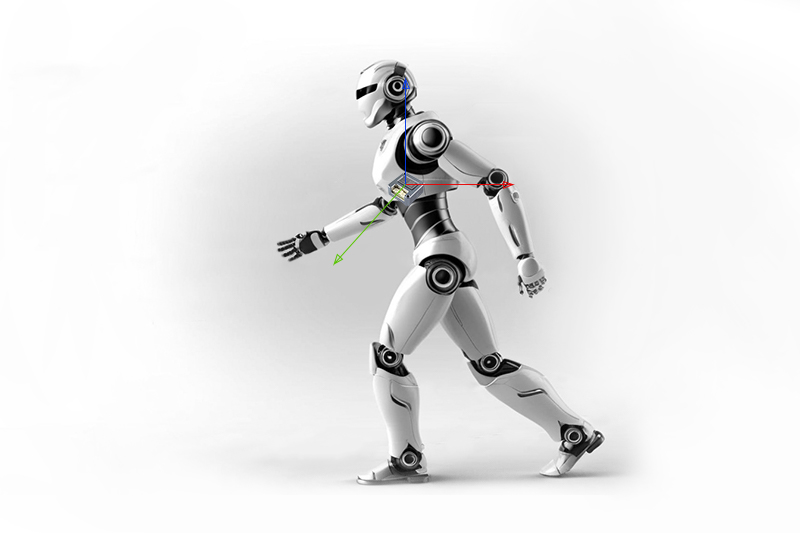
Humanoid robots represent a sophisticated integration of AI, precision mechanics, and high-dynamic motion. At their core lies the power system—a component that demands exceptional dynamic responsiveness, high energy density, and uncompromising safety. Core Battery Requirements for Humanoid RobotsTo meet these demands, robot batteries must meet six critical specifications: High Energy Density: 250-350 Wh/kg to ensure long operation with minimal weight. …

Batteries are essential to modern life, powering everything from smartphones and electric vehicles to home energy systems. Yet like all things, they have a finite lifespan. So when exactly does a battery stop working? Understanding the factors that affect battery life, recognizing signs of degradation, and knowing how to extend it can help you get the most out of your …
For farming professionals relying on drone technology, maintaining battery health isn’t just about performance—it’s about protecting your investment and ensuring operational success. A well-maintained battery delivers consistent spray coverage, prevents mid-field shutdowns, and maximizes chemical efficiency. Here’s how to evaluate your agricultural drone battery’s condition through practical, field-tested methods. Visual Inspection Comes FirstStart with what you can see and feel. …

The battery is the “beating heart” of a humanoid robot, dictating its endurance, power, safety, and commercial viability. However, crafting the ideal battery is a monumental challenge, as it must push the limits across six competing dimensions simultaneously: energy density, power density, cycle life, safety, cost, and environmental adaptability—becoming a true “hexagonal warrior.” The Core Dilemma: Energy vs. Power The …

In drone systems, the propeller, motor, and battery form an interdependent “power triangle.” Propeller parameters—such as size, pitch, material, and number—directly affect power requirements, which in turn dictate battery specifications including capacity, voltage, discharge rate (C-rating), and energy density. Large or high-pitch propellers demand high discharge rates and larger capacities, suited for applications like agricultural or logistics drones. Smaller, low-pitch …

Medical drone delivery services are rapidly reshaping the landscape of global medical logistics and on-demand distribution. From connecting remote medical outposts and rural communities to time-sensitive sample transfers in urban settings, drone delivery and autonomous distribution systems are becoming critical infrastructure for medical transport, disaster relief, and public safety operations. However, the full potential of these revolutionary applications—spanning pharmaceutical delivery, …
Copy?2023 | PAC BATTERY | Sitemap